under
THE DPDP ACT

A fight is on.
IN THE NAME OF PROTECTING YOU, THE GOVERNMENT HAS PASSED A NEW LAW THAT GIVES IT THE POWER TO STRIP YOU OF YOUR PRIVACY. THE LAW ALSO
WATERS DOWN YOUR RIGHT, UNDER THE RTI ACT, TO KNOW WHAT THE GOVERNMENT SAYS AND DOES. PEOPLE ARE FIGHTING AGAINST THIS PERVERSE LAW IN COURT AND OUTSIDE.
KNow more about the act.
Act now.

.png)
.png)

11 commands to erase your right to information
// WHEN YOU DON’T KNOW WHAT THE GOVERNMENT IS UP TO.
YOU CANNOT HOLD IT ACCOUNTABLE.
THAT’S THE PLAN.
THAT IS THE DPDP ACT.

[
01
Even info in public interest is barred.
DPDP Act deleted the existing rule in RTI Law that if information is in public interest, it should be shared with citizens.
[
02
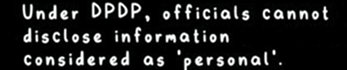
Everything is personal and cannot be disclosed.
Names on tenders, signatures on files, lists of corrupt officials, welfare beneficiary lists, all are now "personal", all shieldable from citizens.
[
03
A safety net was quietly removed.
Earlier if a Member of Parliament could ask for info from government so could a citizen. No more.
[
04
No independent audit of government schemes.
If you ask government for details of beneficiaries of a welfare scheme, it will send you running to first get consent from thousands, sometimes lakhs of beneficiaries before you get it. So practically, independent watchdogs and researchers wont be able to audit the government.
[
05
No official will dare help citizens
If an officer gives you information that is ‘personal’ he is liable for failing the law. It will deter even public-minded officials from disclosing anything. Precaution against disclosure is the game now.
[
06
Every data-gathering citizen becomes a "data fiduciary".
Every citizen, RTI activist, researcher, whistleblower, journalist, is treated as strictly as big data tech company. But gov’t could share data with tech company if it wants.
[
07
India alone scrapped the journalism exemption.
Other countries provide exception to the strict privacy norms for journalists. Indian government actively deleted such exception from the draft law before legislating it.
[
08
Consent from the wrongdoer.
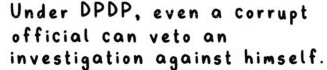
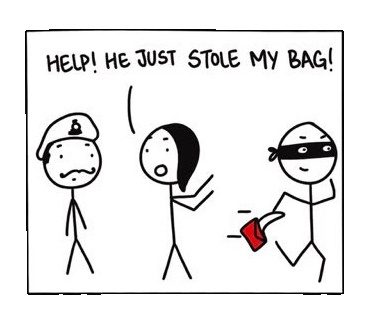
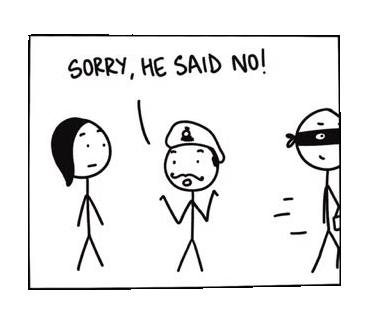
Before investigating a corrupt official or polluting contractor, you must notify them and seek their consent. They hold a veto.
[
09
Erasure on demand = takedown on demand.
If the "data principal" withdraws consent, even post-publication and even if he is the accused, the journalist or researcher must delete. Stories can vanish. So can research.
[
10
₹250 crore fines. A regulator run by the State.
Penalties of up to ₹250 crore chill any newsroom or activist. The Data Protection Board is appointed and controlled by the same government that the RTI law was meant to pierce.
[
11
The accused, the prosecutor and the judge.
The government can now be accused of denying information or breaching our privacy. It will be the prosecutor and the judge in its own case.
.png)

a fight back
// LET'S CLAIM OUR RIGHTS BACK.
WE ARE FIGHTING FOR IT IN THE SUPREME COURT. THAT'S NOT ENOUGH.
JOIN US IN SPREADING THE WORD.

THE REPORTERS' COLLECTIVE HAS FILED A PETITION IN THE SUPREME COURT AGAINST THE UNCONSTITUTIONAL PROVISIONS OF THE DPDP ACT.
THIS IS THE ONLY CASE FILED BY A WORKING NEWSROOM AGAINST THE PERVERSE LAW.
The petition, besides asking for other changes, demands
[01] RTI Act be restored to its original
[02] An exception for anyone using data and information for public purpose,including journalists, researchers, whistle-blowers and civil society watchdogs.
Our team of lawyers is led by Abhishek Manu Singhvi.
The team: Apar Gupta, Muhammad Ali Khan, Indumugi C, Naman Kumar, Omar Hoda,Eesha Bakshi and Uday Bhatia.
Read our petition.
More petitions
[01] Transparency Activist, Venkatesh Nayak. Read it.
[02] National Campaign for People's Right to Information.
[03] Geeta Seshu & Software Freedom Law Centre. Read it
[04] Foundation For Media Professionals.
[05] Mazdoor Kisan Shakti Sangathan.
Updates
If you want to know how the cases are going (Or, not going anywhere)
June, 2026: Silence
Silence from the government and the court.
May 16, 2026
The government does not file a reply. The Supreme Court does not list the case for hearing.
Rest of May, 2026
Silence from the government and the court.
March 23, 2026
Nothing happens. Listed for May 16, 2026.
March 12, 2026
Geeta Seshu & Software Freedom Law Centre file petition. Supreme Court issues notice on it too.
February 16, 2026
A Bench of Chief Justice Surya Kant, Justice Joymalya Bagchi and Justice V M Pancholi of Supreme Court refused to grant an interim stay order on DPDP Act while the hearing is on. CJI Kant commented that “to create a balance between both rights (public interest and privacy), we might have to iron out some creases”. The Bench ordered the matter to be placed before a larger constitutional bench listed to be heard on March 23, 2026 and asked The Centre to file its response by that day.
February 1-15
Three petitions filed. By Venkatesh Nayak, The Reporters’ Collective and National Campaign for People's Right to Information. CJI lists the hearing for a stay on February 16, 2026.
A timeline to silence
// PRIVACY WAS MEANT TO PROTECT THE CITIZEN FROM THE STATE. THE DPDP ACT HAS FLIPPED THAT PROMISE oN ITS HEAD TO PROTECT OFFICIALS.
A series of unfortunate events
June, 2026: Silence
Silence from the government and the court.
May 16, 2026
The government does not file a reply. The Supreme Court does not list the case for hearing.
Rest of May, 2026
Silence from the government and the court.
March 23, 2026
Nothing happens. Listed for May 16, 2026.
March 12, 2026
Geeta Seshu & Software Freedom Law Centre file petition. Supreme Court issues notice on it too.
February 16, 2026
A Bench of Chief Justice Surya Kant, Justice Joymalya Bagchi and Justice V M Pancholi of Supreme Court refused to grant an interim stay order on DPDP Act while the hearing is on. CJI Kant commented that “to create a balance between both rights (public interest and privacy), we might have to iron out some creases”. The Bench ordered the matter to be placed before a larger constitutional bench listed to be heard on March 23, 2026 and asked The Centre to file its response by that day.
February 1-15
Three petitions filed. By Venkatesh Nayak, The Reporters’ Collective and National Campaign for People's Right to Information. CJI lists the hearing for a stay on February 16, 2026.